Halloween CPR Safety: Burns, Allergies & First Aid Tips
Call 911 for serious burns, severe breathing trouble, unresponsiveness, or rapid medical deterioration on Halloween. CPR is used when a person is unresponsive and not breathing normally.
Costumes, crowded walkways, open flames, and unfamiliar candy can create situations that need quick attention. A practical Halloween CPR safety plan helps parents and caregivers prepare for a possible costume emergency, food concern, fall, or medical emergency while keeping Halloween enjoyable.
Preparation starts before children leave home. Check the costume first, assign adult responsibilities, and use consistent safety habits as the group moves from door to door. That preparation begins with Scene 1.
CPR is used when a person is unresponsive and not breathing normally. A burn, fall, or possible allergic reaction alone does not mean CPR should begin. Call 911, send someone for an AED when available, and follow current training, dispatcher instructions, and AED prompts.

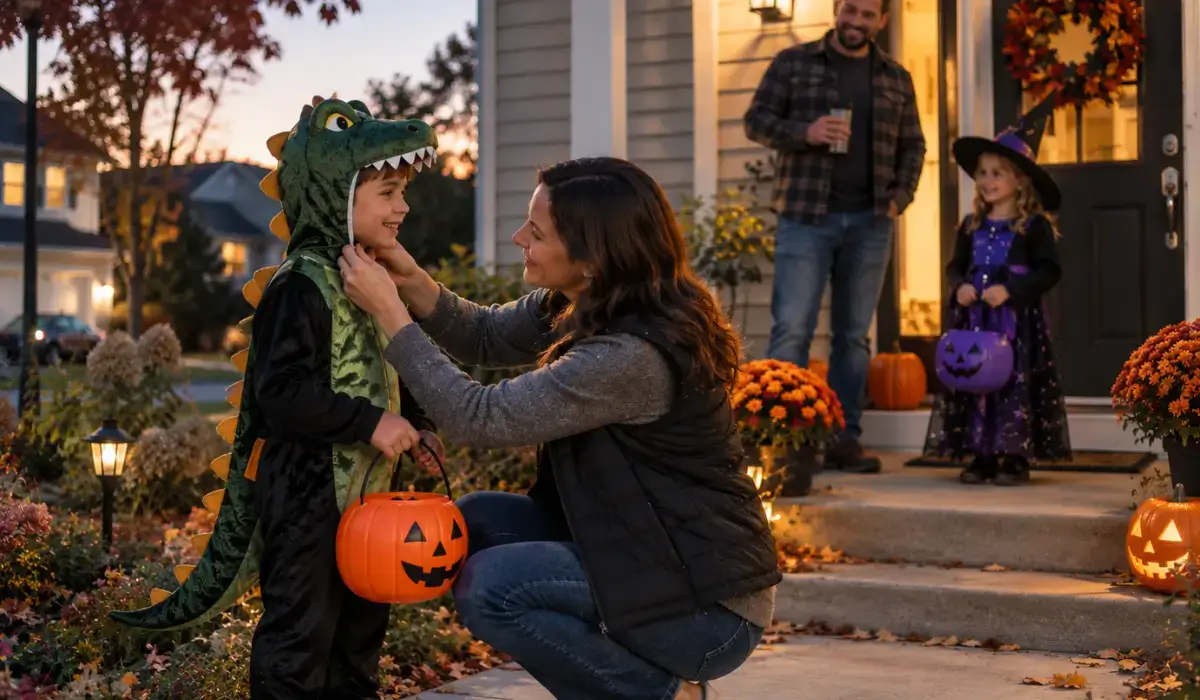
Scene 1: Test the Costume Before Halloween Night
A costume should allow a child to move, see, and use both hands comfortably. Before Halloween night, ask your child to complete these movement checks:
- Walk up and down steps
- Sit, stand, and turn
- Look left, right, up, and down
- Use both hands
- Walk with the intended candy container
- Practice removing a mask or headpiece
- Confirm that footwear is secure
Check What Could Catch, Drag, or Block Vision
Look for long capes or fabric near the feet, loose sleeves, decorative cords, oversized shoes, and props that limit free hand movement. Masks should allow the child to see adequately in every direction.
Keep costume components away from candles, heaters, and open flames. Current U.S. Consumer Product Safety Commission guidance should be used to verify costume visibility and fire-safety recommendations before publication
Create a Child-Specific Emergency Identifier
A discreet identifier can include the child’s first name, a parent or guardian phone number, the group leader’s contact information, and an allergy notice when appropriate. Emergency-medication information may also be included when it matches the family’s established plan.
Avoid publicly displaying the child’s full name, home address, or other unnecessary private information. Give the responsible adult useful emergency information without exposing more personal information than necessary.
Scene 2: Give Every Adult One Job Before Leaving
Assign responsibilities before the group leaves. In smaller families, one adult may handle several roles, but each responsibility should still be discussed.
Name the Exact Meeting Point
Choose a particular corner, community building, staffed event entrance, familiar home, or designated parked vehicle when safe. Everyone should know the same exact location before the group starts walking.
Avoid vague instructions such as “meet back here.” A specific meeting point gives children and adults one location to remember when the group becomes separated.
Scene 3: Use a Door-to-Door Safety Rhythm
Repeating the same routine at each property can make safety checks easier to remember. Use these six actions during the evening
- Stop before approaching.
- Check steps, railings, pets, decorations, and lighting.
- Walk instead of running.
- Keep costumes away from visible flames.
- Regroup.
- Confirm every child is accounted for.
Decorations Can Change the Walking Surface
Extension cords, inflatable decorations, pumpkins, artificial fog, lawn ornaments, temporary steps or platforms, and crowded porches can affect the approach to a doorway. Children may need extra time to see where they are stepping.
A decoration is not automatically unsafe because it is present. Check lighting, placement, visibility, crowding, and clear walking space before children approach.
Scene 4: Know What to Do When Clothing or a Costume Is Burned
Move the child away from the source when it is safe to do so and prevent the child from moving toward another hazard. Call 911 for a serious burn or if the child develops severe breathing trouble, becomes unresponsive, or deteriorates rapidly.
Follow current verified first-aid guidance for cooling a burn. Avoid unverified home remedies, and do not pull away material attached to damaged skin. Burns involving areas such as the face, airway, eyes, or hands, extensive burns, and other serious circumstances may require urgent medical evaluation.
For more detailed burn-response information, see Illinois Safety’s separate fireworks burn-response resource rather than trying to duplicate a full burn-treatment guide here.
When CPR Becomes Relevant to Halloween CPR Safety
A burn alone does not mean CPR is needed. CPR may become necessary after an emergency if the person becomes unresponsive and is not breathing normally.
Have one person call 911 and another retrieve an AED when available. Follow current American Heart Association CPR and emergency cardiovascular care guidance, dispatcher directions, and AED prompts.
Scene 5: Pause Before Candy Is Shared or Eaten
Wait for a responsible adult to review candy when needed. Keep packaging available, do not guess about unclear ingredients, and separate items that do not fit the child’s established allergy plan.
Prevent candy swaps when allergy information is uncertain, supervise young children while they eat, and keep prescribed emergency medication accessible according to the child’s plan.
A careful candy allergy response starts with reliable ingredient information and the child’s established emergency plan rather than assumptions based on a wrapper or the food’s appearance.
Use a "Known, Unknown, Not for This Child" System
Sorting candy into three categories gives caregivers a consistent way to handle uncertain items. Base each category on available ingredient information and the child’s established allergy plan.
- Known: Ingredients and packaging have been reviewed.
- Unknown: Information is missing or unclear.
- Not for this child: The item conflicts with the family allergy plan.

Visual inspection cannot establish that a food is allergen-free. When ingredient information is missing or unclear, do not guess.
Link Rather Than Repeat the Allergy Response Guide
Severe breathing trouble, swelling, collapse, or rapid whole-body symptoms require immediate attention. Follow the child’s emergency plan and current medical guidance.
Our choking and allergy response information addresses signs and response considerations in more detail. Keep the resource available before Halloween so caregivers know where to find it when needed.
Scene 6: A Child Falls, Collapses, or Stops Responding
Start by checking the immediate situation before deciding what action is needed. Focus on three observations:
- Is the area safe?
- Is the child responsive?
- Is the child breathing normally?
Assign someone to call 911 and another person to retrieve an AED when available. Begin age-appropriate CPR when indicated by current training, and follow dispatcher instructions and AED prompts.
An important part of child first aid is giving emergency responders useful facts rather than trying to diagnose the cause. Report what happened—a fall, burn, food exposure, collapse, or another observed event—and describe changes in responsiveness or breathing.
Illinois Safety’s How to Perform CPR resource addresses CPR separately. Hands-on training gives caregivers an opportunity to practice emergency skills before they are needed.
Use the Halloween Emergency Handoff Card
Emergency responders need clear facts about the child and what happened. Keep the information short enough for an adult to find and report quickly.
Include:
- Exact location
- Child’s approximate age
- What happened
- Whether a fall, burn, food exposure, or collapse occurred
- Known allergies
- Whether prescribed medication was used
- Whether CPR or an AED was used
- Changes in responsiveness or breathing
- Parent or guardian contact information
Describe what you observed rather than guessing at a diagnosis.
Which Training Supports Halloween CPR Safety?
Halloween readiness can include child and infant CPR content, choking-response practice, AED awareness, and basic first aid. Family and caregiver training should match the responsibilities of the person taking the course.
Our HeartSaver First Aid CPR AED training covers first-aid, CPR, and AED skills. Illinois Safety also lists BLS, ACLS, PALS, NRP, and Fire Extinguisher Safety among its programs.
Our Illinois Safety instructors include current firefighters, paramedics, and nurses. That professional background supports the practical, hands-on approach we bring to training.
Parents, grandparents, teachers, babysitters, nannies, and other caregivers should choose training that fits their responsibilities. People who regularly supervise children can also see our CPR training for babysitters and nannies .
For families considering CPR classes in Chicago, course content and training needs should drive the decision. The appropriate course depends on the participant’s role, skills, and certification requirements.
Halloween Emergency Questions for Parents and Caregivers
When should CPR be used during a Halloween emergency?
CPR is used when a person is unresponsive and not breathing normally. A burn, fall, or allergic reaction alone does not mean CPR should begin.
What should parents do with candy that has no ingredient label?
Do not guess about ingredients. Treat the candy as unknown and follow the child’s established allergy plan.
When does a Halloween burn require 911?
Call 911 for a serious burn, severe breathing trouble, unresponsiveness, or rapid deterioration. Follow current first-aid and dispatcher guidance.
What information should you give 911?
Give the exact location, child’s approximate age, responsiveness, breathing status, and what happened. Include relevant allergies, medication use, and useful access information.
Prepare Before Costumes and Candy Come Out
Knowing what to do is one part of Halloween emergency preparation. Parents and caregivers who want to practice CPR, AED use, and first-aid skills can consider hands-on training that matches their responsibilities.
Illinois Safety lists CPR and first-aid training options, including HeartSaver First Aid CPR AED, for caregivers preparing for emergencies involving children.


 Powered by