
CPR and First Aid for Flu Season Emergencies
CPR does not treat the flu. But flu season emergencies can include situations where someone who has been sick becomes unresponsive and is not breathing normally. In that situation, CPR may be needed. Serious breathing trouble, sudden confusion, collapse, or a significant change in the person’s condition can also signal an emergency.
During flu season, caregivers do not need to diagnose the illness before responding to a dangerous change. The priority is to recognize what changed, get appropriate help, and use CPR or first-aid skills when needed.
Case File 1 – “They Were Sick, but Now They Seem Confused”
A sick person may be tired or weak, but a sudden change in awareness deserves attention. Being difficult to wake, giving answers that do not make sense, being unable to follow simple directions, having serious breathing trouble, or suddenly getting much worse can signal illness emergencies that require prompt action.
The CDC lists emergency warning signs of flu complications that warrant medical attention. Do not dismiss new confusion or reduced responsiveness simply because the person was already sick.
Make sure the area is safe, check responsiveness and breathing, and activate emergency help when the person’s condition is severe or quickly worsening. If the person becomes unresponsive and is not breathing normally, follow your CPR training, 911 dispatcher instructions, and AED prompts.
Case File 2 – “An Older Adult Gets Up and Falls”
Before Moving the Person
Check scene safety and responsiveness. If the person can answer, ask about pain and look for obvious injuries or signs of a possible head impact. Avoid unnecessary movement if you suspect a serious injury.
Breathing trouble, loss of consciousness, significant injury, or a major change in awareness may require emergency help. Follow current first-aid guidance and 911 dispatcher instructions based on the person’s condition.
Why a Fall Can Be More Than a Fall
A person may trip, but a medical event may also occur before the person reaches the floor. Tell responders what you observed: whether the person appeared to trip or faint, whether breathing trouble or chest discomfort was reported, whether the head was struck, and whether responsiveness changed.
Case File 3 – “A Child’s Breathing Looks Different”
Caregivers often recognize changes from a child’s usual breathing and behavior. The CDC identifies emergency warning signs of flu complications in children that include fast or troubled breathing, bluish lips or face, dehydration, reduced alertness or interaction, and symptoms that improve but then return or worsen. Caregivers should seek appropriate medical attention when these or other serious changes occur.
The Caregiver’s Job Is Recognition, Not Diagnosis
You do not need to determine whether influenza, asthma, pneumonia, or another condition caused the change before seeking appropriate help. Monitor breathing and responsiveness, follow the child’s existing medical action plan when applicable, and seek medical or emergency help based on the severity of the situation.
Case File 4 – “The Person Collapses in the Bathroom or Bedroom”
Finding a sick person collapsed and unresponsive changes the priority immediately. Make sure the area is safe, check responsiveness and normal breathing as taught in CPR training, call 911 or assign someone to call, and have an AED brought to the person when one is available.
When Flu Season Emergencies Require CPR
If the person is unresponsive and is not breathing normally, begin CPR as directed by your training. Follow 911 dispatcher instructions and AED prompts while waiting for professional responders.
A flu CPR response is necessary only when the person’s condition calls for CPR; CPR does not treat influenza. Do not assume that influenza caused the cardiac arrest simply because the person had flu-like symptoms before collapsing. The cause requires medical evaluation.
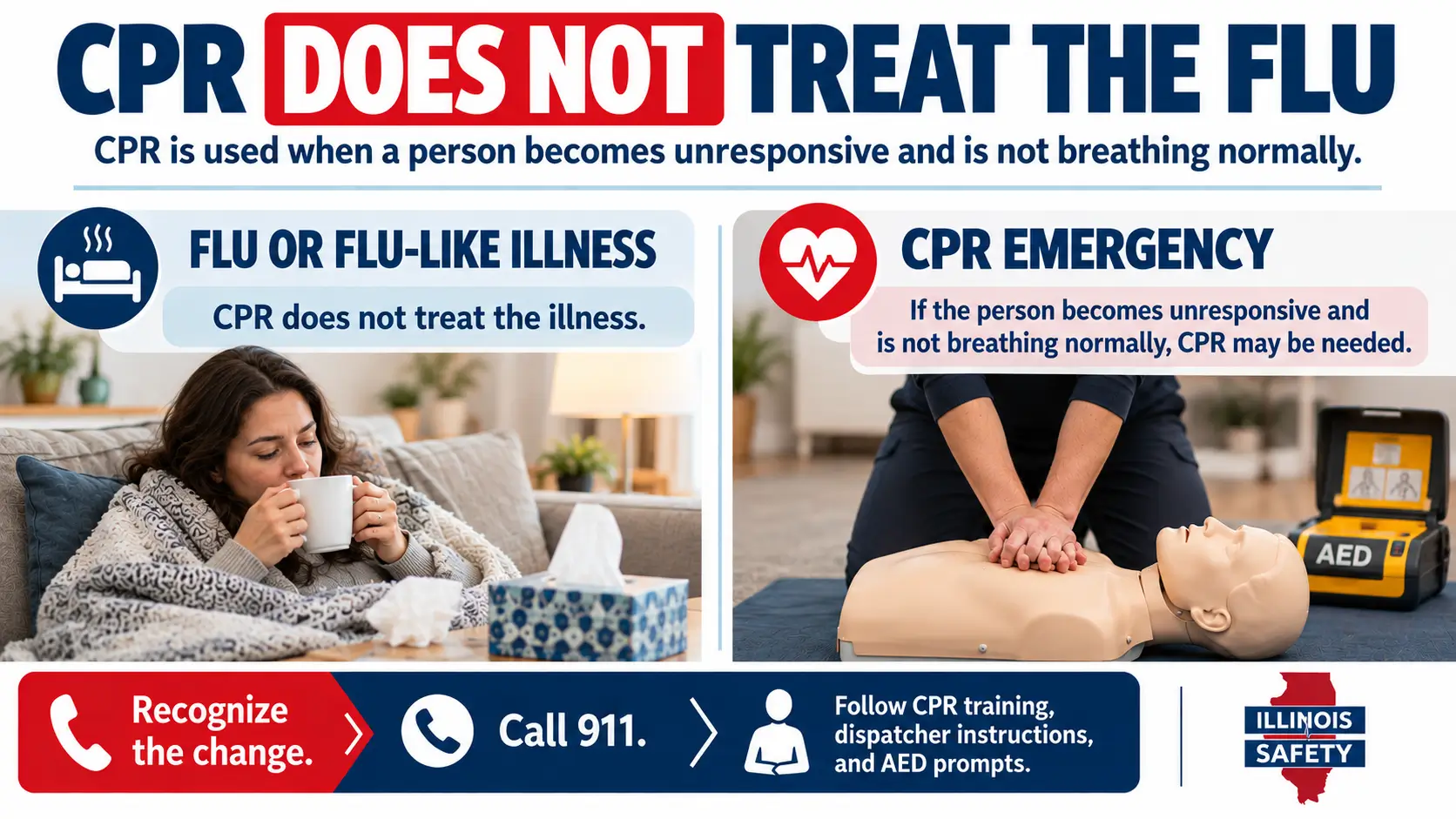
A flu CPR response means responding to a CPR emergency involving someone who was already sick. It does not mean CPR treats influenza. Do not assume influenza caused a cardiac arrest simply because the person had flu-like symptoms beforehand. The cause requires medical evaluation.
Our How to Perform CPR resource can help refresh key CPR steps, while hands-on training gives you the practice needed to respond in an emergency.
A Closed Door Can Delay Recognition
Someone who feels sick may rest alone in a bedroom or bathroom, making a sudden change harder to notice. Reasonable check-ins, access to a phone or call device, clear pathways, and known building-entry instructions can reduce avoidable delays when emergency help is needed.
Case File 5 – “The Responder Is Worried About Infection During CPR”
Concern about infection is understandable during CPR during illness, but it should not unnecessarily delay calling for emergency help. Start with scene safety, activate emergency services, and follow current American Heart Association CPR and emergency cardiovascular care guidance and 911 dispatcher instructions.
Use barrier devices or available protective equipment according to current training and applicable infection-control guidance. If an AED is needed, follow its prompts and dispatcher instructions.
What the Responder Should Do About Infection Concerns
CPR methods can differ based on the person’s age, the responder’s training, and the circumstances. Follow current CPR instructions for hands-only CPR or rescue breathing rather than relying on remembered procedures that may not apply to the situation.
Use appropriate protective equipment or barrier devices when available and when their use matches current training. Infection concerns should not prevent you from calling 911 and getting professional help.
After a relevant exposure, follow current public-health or healthcare advice appropriate to the exposure. Do not assume that testing, medication, isolation, or another specific step is required without current advice for that situation.
The Flu-Emergency Handoff: Facts That Help Responders
Emergency responders need clear observations and relevant facts, not an unconfirmed diagnosis. Be ready to share:
- Exact location and building access
- Age and responsiveness
- Current breathing status
- When the illness began
- What changed and when
- Any fall or head impact
- Known medical conditions and medications
- Whether CPR or an AED was used
- Whether others in the household are ill
Unless influenza has been professionally confirmed, describe the person as having “flu-like symptoms.” A brief timeline of the sudden change can help responders understand how the situation developed.
Build a Two-Person Caregiver Backup
When two caregivers are available, divide the most important jobs. One person can stay with the sick person, monitor responsiveness and breathing, and track changes. The other can call 911, open the entrance, retrieve an AED when available, supervise other dependents, and prepare known medical information for responders.
The roles can change with the situation. What matters is knowing who will call for help and who will stay with the person.
CPR, BLS, and First Aid Serve Different Flu-Season Needs
| Training | Relevant Flu-Season Application |
|---|---|
| CPR/AED | Responding when someone becomes unresponsive and is not breathing normally |
| First Aid | Responding to sudden illness, fainting, falls, and injuries within the responder's training |
| BLS | Healthcare-focused CPR and coordinated team response |
| PALS | Advanced pediatric response for appropriate healthcare roles |
These courses prepare people for different emergency-response responsibilities rather than teaching them to diagnose influenza. Illinois Safety offers HeartSaver First Aid CPR AED and BLS certification training for different training needs.
Flu-Season Emergency Training in Chicagoland
A person can start with flu-like symptoms and later experience a separate emergency involving a fall, serious breathing trouble, loss of responsiveness, or collapse. Training gives people practice recognizing an emergency, calling for help, starting CPR when needed, and using an AED.
Our first aid training in Chicago supports families, school and childcare teams, workplace staff, home-health workers, community volunteers, and healthcare professionals. Illinois Safety is employee owned and operated, and our instructors are current firefighters, paramedics, and nurses. Our Illinois Safety instructors bring their professional backgrounds into hands-on classes.
We also bring equipment to organizations for on-site American Heart Association classes throughout Chicagoland.
Common Questions About Flu-Season Emergencies
Can the flu cause someone to need CPR?
CPR does not treat influenza. CPR may be needed if a sick person becomes unresponsive and is not breathing normally.
When should a caregiver call 911 for flu-like symptoms?
Serious breathing trouble, collapse, major changes in responsiveness, or severe and rapidly worsening symptoms may require emergency help. Follow current medical and public-health guidance for specific emergency warning signs.
Is CPR different when someone may be contagious?
Follow current CPR training, dispatcher instructions, and applicable infection-control guidance. Use appropriate protective equipment or barrier devices when available and consistent with current recommendations.
Can an AED be used when someone is sick?
Illness alone does not determine whether an AED is needed. During a suspected cardiac arrest, follow CPR training, dispatcher instructions, and the AED’s prompts.
Prepare for Flu Season Emergencies with CPR Training
Flu Season Emergencies can change quickly. Recognizing a dangerous change, getting appropriate help, and knowing how to respond can matter more in the moment than knowing exactly what caused the illness.
Illinois Safety gives people hands-on practice with CPR, AED, first-aid, and BLS skills for emergency-response responsibilities.
Choose the next step for your family or organization.
Schedule a Class Call (630) 290-4280
























































 Powered by