CPR for Thanksgiving: Cooking, Fires, and Food Choking
CPR for Thanksgiving is one part of a bigger host plan: protect the scene and call 911 for a serious burn, a fire that is spreading, severe choking, a collapse, or a guest who won’t respond. Begin CPR only if the person is unresponsive and not breathing normally, which is when the standard CPR steps call for it.
Good Thanksgiving first aid is less about one heroic person and more about a host who has already decided who does what. Crowded kitchens make that harder. The national holiday safety guidance names Thanksgiving as the No. 1 day of the year for home cooking fires, with unattended cooking as the leading cause. The same guidance points out that most out-of-hospital cardiac arrests happen at home, so the person nearest a collapsing guest is usually family.
Here is a four-card incident board you can set up before the oven goes on.
Put the Incident Board Where Adults Can See It
Post a one-page plan near the kitchen entrance, not right beside the stove. Write it in large print and use people's names, not "someone."
The board should list:
Keep private medical details off the wall. A guest who has never been in your home should still be able to follow the board.
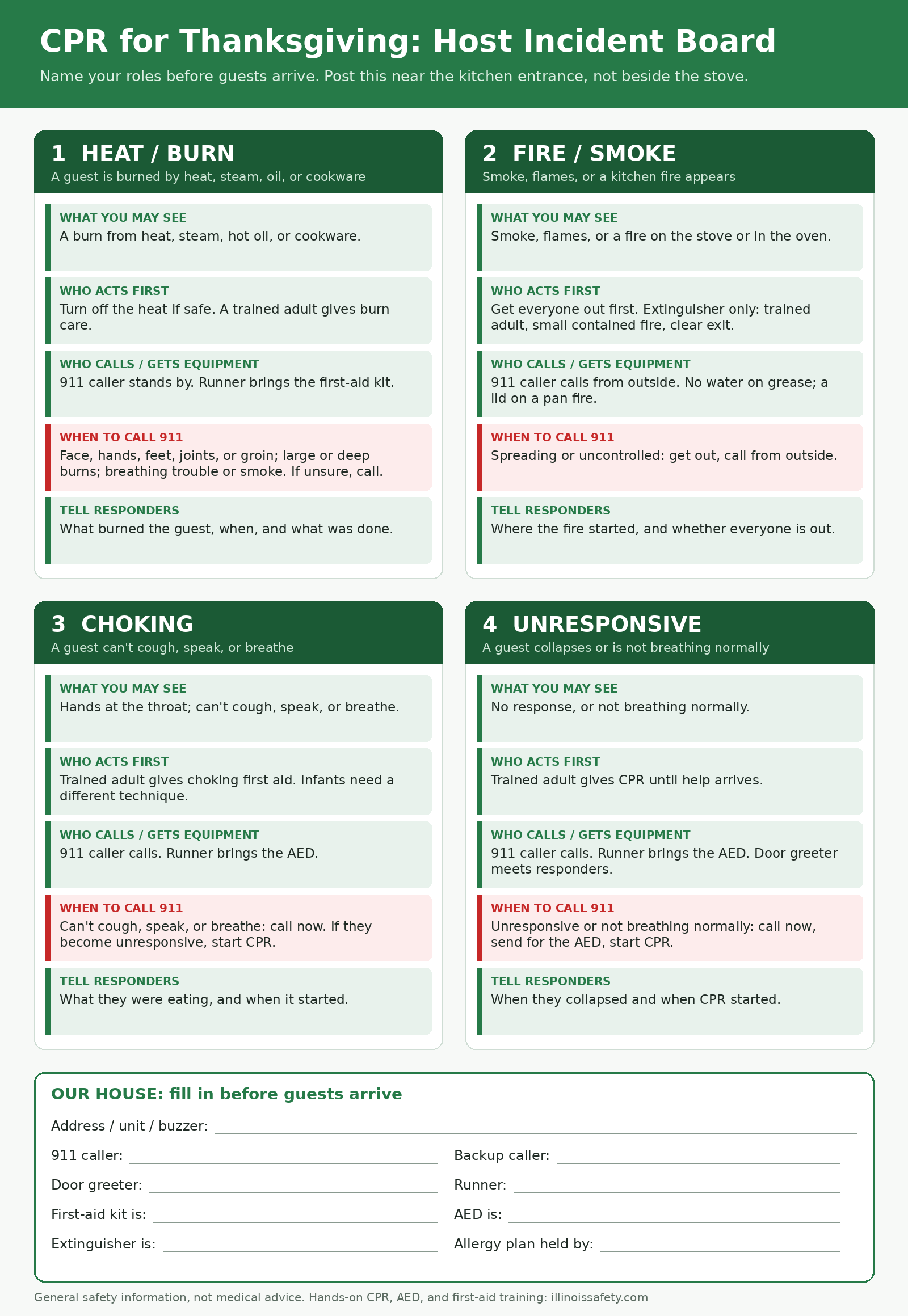
Incident Card 1: A Guest Is Burned by Heat, Steam, Oil, or Cookware
Person A stops the exposure. Turn off the heat source or move away from it if that’s safe, keep other guests out of the area, and help the injured person away from continuing danger without creating a new injury.
Person B calls for help when the burn may be serious. The standard burn first-aid guidance lists warning signs that call for immediate emergency care. These include burns to the face, mouth, nose, hands, feet, joints, or groin; burns covering a large area; deep burns; and burns in very young or older people. Breathing trouble, smoke exposure, or loss of consciousness also means calling 911. Don’t try to judge burn depth at the table. If you’re unsure, call.
Person C gives first aid within their training. The standard burn care advice is:
✓ Remove clothing or jewelry at the burn site quickly, before swelling starts, unless it is stuck to the skin.
✓ Cool the burn under clean, cool running water for 5 to 20 minutes.
✓ Don’t use ice, butter, or other greasy home remedies.
✓ Cover the burn loosely with a clean, dry, non-adhesive dressing.
Our summer burn response guide covers burn care in more depth.
Keep the Kitchen From Becoming a Second Emergency
One adult should watch the stove, keep children out, and clear spills, broken dishes, and knives while others help the injured guest.
Incident Card 2: Smoke, Flames, or a Kitchen Fire Appears
Separate two decisions: getting people out, and whether anyone should try to put out the fire.
First, alert and move people. Call 911 for any fire that is spreading or uncontrolled. Move guests toward an exit, account for children, older adults, and guests with disabilities, keep exits clear, and don’t let anyone go back inside.
Second, shut down hazards only when it’s safe. Turning off an appliance or closing a door can help, but no one should approach a dangerous fire to do it.
Third, use an extinguisher only within your training. It’s only worth considering when the fire is small and contained, the person is trained, the right extinguisher is in reach, there’s a clear way out, and 911 has been called when needed. The holiday cooking safety tips suggest keeping an extinguisher in the kitchen. Knowing how to use one is a separate skill.
Do Not Treat Every Kitchen Fire the Same Way
Grease fires, oven fires, microwave fires, electrical appliance fires, and clothing fires each call for a different response. Water can make some of them worse; never toss water on a grease fire, and put a lid on a pan fire to smother the flames. Because the right response depends on the type of fire, ask your local fire department how to handle each one, and call 911 if a fire starts to spread. For hands-on practice, Illinois Safety runs a Fire Extinguisher Safety Program.
If you’re frying a turkey, safety guidance says to keep the fryer away from the house and other structures, set it on a flat, even surface, and never fry a turkey that isn’t fully thawed.
Incident Card 3: A Guest Appears to Be Choking
Give everyone one job before anything else:
✓ One trained person responds to the choking guest.
✓ One named person calls 911 when it’s needed.
✓ One person goes for the AED.
✓ One person clears chairs and bystanders.
✓ A family member notes what the guest was eating.
✓ Another adult takes the children out of the room.
Why "CPR for Choking" Needs Careful Language
CPR is not the first step for a conscious person who is choking. According to the standard adult and child choking guidance, a responsive adult or child gets back blows and abdominal thrusts. If the person becomes unresponsive, the responder lowers them to the floor and begins CPR, starting with compressions. Infants need a different technique. Our choking first aid guide walks through how to tell choking apart from an allergic reaction.
Meal Details That Help EMS
When you can, note the facts for responders:
✓ The food the person was eating
✓ About when the symptoms started
✓ Whether an allergy might be involved, and whether prescribed medication was used
✓ Whether choking first aid was tried
✓ Whether the person lost responsiveness, and whether CPR or an AED was used
Don’t guess at the cause. Tell responders what you saw.
Incident Card 4: A Guest Collapses or Becomes Unresponsive
Keep the sequence short:
- Check that the area is safe.
- Check whether the person responds and is breathing normally.
- Tell a named person to call 911.
- Send someone for an AED.
- Begin CPR if the person is unresponsive and not breathing normally.
- Follow the dispatcher’s and the AED’s instructions.
- Keep going until professional responders take over or the person clearly recovers.
The American Heart Association reports that CPR given right away can double or triple a person’s chance of surviving cardiac arrest. Illinois Safety’s How to Perform CPR page reviews the technique.
CPR for Thanksgiving Emergencies: Keep the Response Area Clear
A second adult should move chairs and tables, keep children and pets away, open the front door, turn on the outside lights, and guide EMS in from the street or building entrance.
Run a 90-Second Host Briefing Before Cooking Begins
Before the first burner goes on, tell the adults:
✓ “Here is the exact address.”
✓ “Maria will call 911. Dev will meet responders.”
✓ “The extinguisher is here, and the first-aid supplies are here.”
✓ “One guest has shared an allergy plan, and Grandpa has it.”
✓ “Kids stay out of the cooking area.”
✓ “If we evacuate, no one goes back in.”
Set Three Boundaries Around the Holiday Kitchen
Boundary 1: The cooking-only zone. Keep running children, loose bags, coats, extra chairs, and guests carrying drinks away from hot surfaces. The holiday safety guidance recommends keeping kids and pets at least three feet from cooking areas.
Boundary 2: The carving and serving zone. This is where knives, hot platters, steam, crowded counters, and guests reaching across each other come together.
Boundary 3: The dining and supervision zone. Seat young children where an adult can see them, help older adults who need it, share food allergy information, ask guests not to walk around while eating, and keep the path to the exits clear.
After an Incident, Close the Safety Loop
Once things are calm:
Training That Makes Your Holiday Plan Realistic
A plan only works if someone in the room can do the skills, and hands-on practice is what turns the incident board from a hope into a plan. HeartSaver First Aid CPR AED covers CPR, AED use, choking relief, and first aid. The Fire Extinguisher Safety Program covers extinguishers. If you’re comparing options for CPR training Chicago residents can book, start with our Chicago CPR training locations.






















































 Powered by